

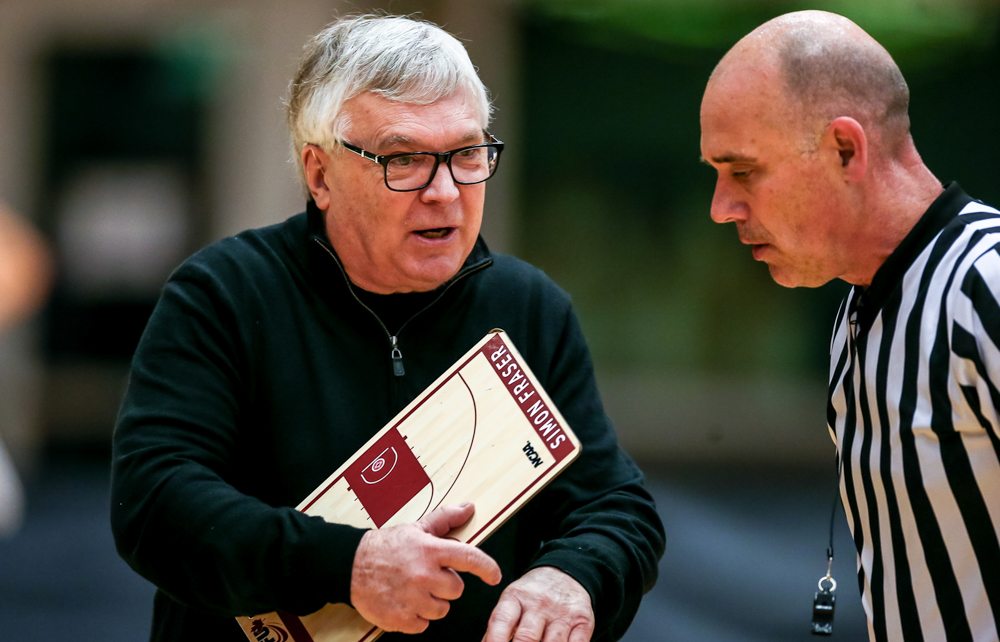
By Howard Tsumura
Varsity Letters
BURNABY MOUNTAIN — Every kid is born with a compass, and from the moment we learn to crawl we can understand it to be our keeper, a talisman of sorts with the mythical power to protect, inspire and enlighten.
The first time you hear the story of Bruce Langford’s childhood, however, you might get the idea that by the time he reached his senior year of high school at Burnaby South Secondary in the fall of 1968, that his compass had already been broken beyond repair.
Or maybe, for one who would so miraculously transform himself from that of an at-risk youth to one of most successful coaches in Canadian basketball history, it was simply a matter of acknowledging an undeniable magnetic tug within, then trusting what that inner voice had to say.
In the end, the simple act of finding his purpose illuminated a path on which he became the very definition of the self-made coach, someone who refused to let the fact that he’d never played the game retard his quest for knowledge.
Still, when viewed in its entirety, the contrasts revealed along that journey are so extreme as if to seem a trick of the light.
In his mid-teens, Langford struggled through a daily existence of detachment, rebellion and its pull to a darker side, all after his family had finally settled in Burnaby after having picked up and moved 10 times by his 14th birthday.
He dealt with the divorce of his parents, was kicked out of his home on a pair of occasions and placed squarely in the bad books at Burnaby South, but then went on to win a combined eight provincial high school and university national championships, all while influencing two generations of female student-athletes over what was a 46-year coaching career.
And within that maelstrom of polar opposites came the ultimate irony: Discovering his deliverance as a high school teacher and coach within the very same delivery system which had rejected him as a high school student.
“I was a juvenile delinquent,” Langford, 74, explains without hesitation. “But I think I’m a motivator of young people. I got into teaching because I thought I would want to get into alternate-ed teaching… to try and turn around people who were turned off with life. I was alienated. I was turned off.”
Safe to say, from the moment he acknowledged his purpose, ‘OFF’ became ‘ON’ until this past spring when Langford announced his retirement from the Simon Fraser women’s basketball program.
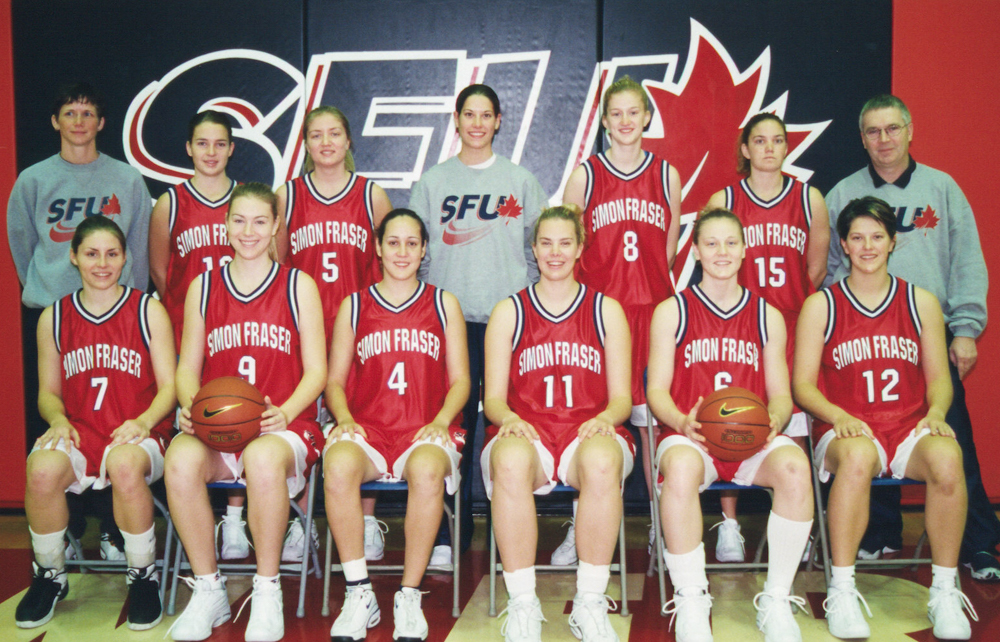
His opening act atop Burnaby Mountain began in 2001-02 with the first of five national Bronze Baby titles over the nine seasons in which he coached Simon Fraser in U SPORTS, while the closing act was highlighted by two Sweet 16 national championship forays over the 16 campaigns in which he shepherded the Red Leafs’ pioneering stateside journey as an NCAA Div. 2 team.
Now, as Simon Fraser prepares for a return to U SPORTS in 2027-28, Langford’s accomplishments as the successor to the groundbreaking former SFU, and Canadian national and Olympic team head coach Allison McNeill are sure to be re-discovered by a new generation of Burnaby Mountain fans, including the fact that his overall record in U SPORTS was a stunning 293-45, its resulting .867 winning percentage placing him second all-time in Canada’s top level of women’s university basketball competition.
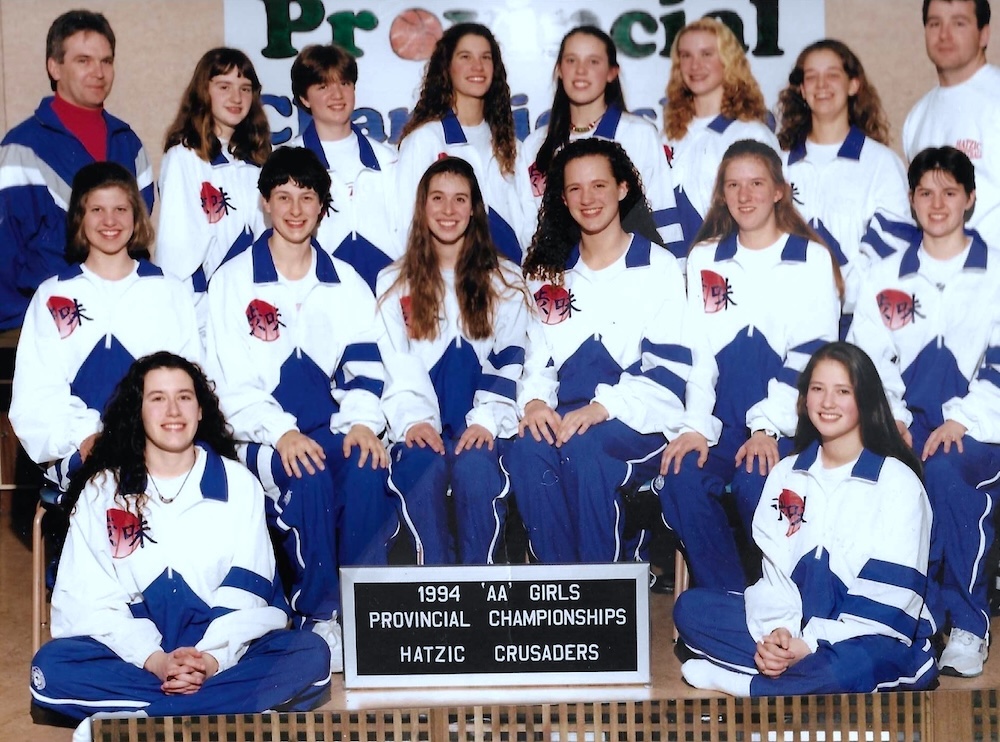
Add the three B.C. senior girls provincial championship titles he won in the Mission school district — at Double-A Hatzic in 1994, and then in both 2000 and 2001 at then-top-tiered Triple A Heritage Park — and you discover the truth about Bruce Langford’s childhood compass: It was never really broken, he just didn’t know how to trust it.
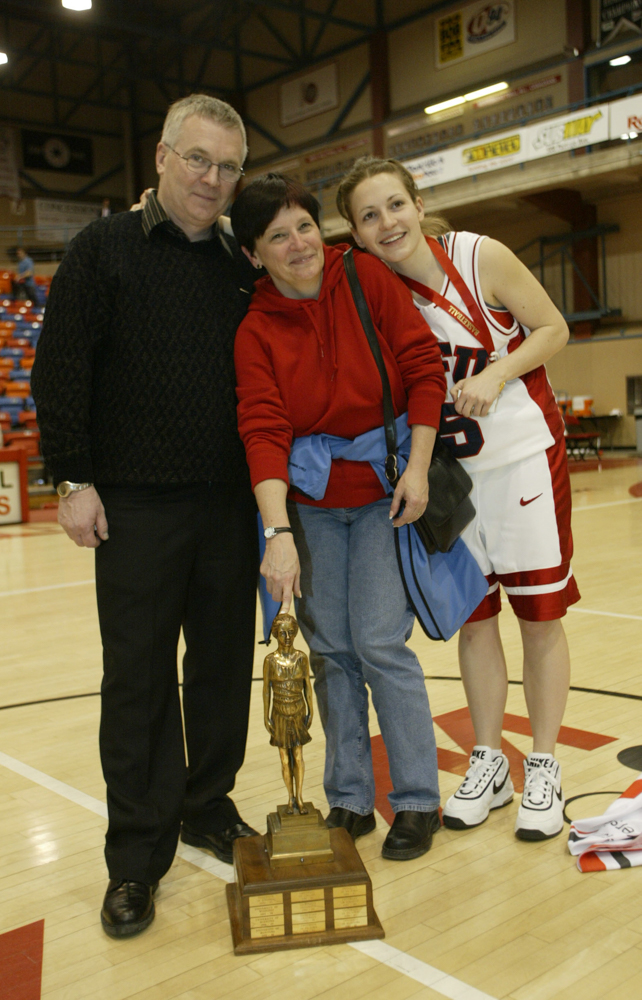
FIVE HUNDRED THE HARD WAY
Bruce Langford’s path towards a career in basketball was so atypical that it seems only fitting that his most incredible accomplishment is one so rare it has likely never appeared on the radar screen of the most in-the-weeds hoop historians.
Consider: When Langford took the helm of the SFU women’s program 2001-02 he had never before coached at a major Canadian university (CIAU-to-CIS-to-U SPORTS) or either of its U.S. equivalents (NCAA or NAIA).
He was 51 at the time, and from ground zero proceeded to go 524-224 (70.1 winning percentage) over his 25 SFU campaigns.
It is not readily known if any other head basketball coach has managed the same accomplishment in either the men’s game, the women’s game, or a combination of coaching both.
The clear delineation here is that upon beginning your first head coaching job — at age 50 or above — within any of the above mentioned associations, that you went on to win at least 500 games.
Logic tells you that within the vast canon of college and university basketball history that there must be others, but logic also tells you that that when it comes to Bruce Langford all bets are off the table.
“Who would have thought a 51-year-old high school coach could get 500 (university) wins?” Langford said late in the 2023-24 season after achieving the mark. “Not me.”
So how did he do it?
Maybe the best way to trace that genesis and measure just how far he came is to hop in the wayback machine and set the dials for the 1979-80 B.C. high school basketball season.
Back then, a 28-year-old Langford had just gotten his first full-time coaching assignment as a first-year substitute teacher, guiding the Grade 9 girls team at Langley’s then-H.D. Stafford Junior Secondary.
One day, after reading a magazine which included a section dedicated to schematics and techniques, he went to practice determined to have his players improve their defence.
“One of the things the magazine said was ‘Teach defence by having them put their hands behind their back, then have them keep their balance as they move and adjust,’” relayed Langford. “So we’d all do this drill.
“Then, in one of the games, one of my girls goes out on the floor and is playing with her hands behind her back. My bench is laughing. They’re all going ‘Look at what she’s doing’ and I said ‘Stop that. It’s not her problem she’s doing that. It’s my problem because I obviously didn’t explain the purpose of the drill very well.’ It was my fault.”
Back in an era where club basketball was not yet a rumour and student-athletes so often times were not introduced to the sport until high school, such scenes were not exactly rare.
Yet its mention here is significant for no other reason than to illustrate the steep arc of Langford’s own learning curve following a pivotal chapter of his life in which he managed to get back on the straight and narrow.
Through the strength and belief of his wife Leslie (the high school sweethearts got married 53 years ago, in 1973, when he was 21 and she was 19, and are still going strong), Langford had gotten his high school diploma a year late, returning to Burnaby South in the fall of 1969 and asking of the few teachers who would give him an audience if they would take him back and give him a second chance to make a passing grade.
He then worked throughout much of the decade in the computer department at Simpson-Sears, matriculating for one year at Douglas College in 1974, then the next three years at Simon Fraser, graduating with his teaching degree in 1978.
It was somewhere in that neighbourhood that Langford had begun attending boys high school games at East Vancouver’s Gladstone Secondary where his younger brother Paul Langford (the longtime Riverside Rapids girls high school coach) was an assistant coach and his even younger brother Peter Langford (a longtime basketball referee) was a player.
“I felt guilty that Peter didn’t have a father-figure in his life so I would try to go to his games,” said Langford, six years older than Paul and 10 years older than Peter.
While there, he’d study the UCLA high-post offence being employed by Gladstone’s head coach Bill Ruby to the point where he became book-smart enough to understood its principles and its patterns.
“But I didn’t know anything else about basketball other than that, and so when I volunteered to help coach I realized how little I knew,” said Langford. “But I’ve never stopped trying to learn. Even now, if you ask me ‘What’s your No. 1 quality?’ I say ‘I’m still trying to learn to be a good basketball coach.’”

THE ORIGINAL DEFINITION OF WORKING ‘REMOTE’
Bruce Langford had made enough inroads at H.D. Stafford that he was told chances were very good he would return for the 1980-81 school year, this time as a full-time teacher.
It fell through, however, when the vice-principal informed him late in the summer that they’d miscounted their number of incoming students and thus wouldn’t require his services.
“I hadn’t looked anywhere else and this was August,” Langford remembers.
After finding out what was available in the 11th-hour job market, Langford settled on what he called “a .7 job.”
But the rub, and it was a big one, was that the school, San Josef Elementary and Junior Secondary, was tucked away in one of the most remote locations in all of B.C.
“It was on Vancouver Island, at the northern tip in a place called Holberg, which is just under Cape Scott,” Langford explained. “So you go to Port Hardy and then you cross over (50 miles on a logging road to Holberg) and there was this tiny military base. It turns out it was to teach Grade 8, 9, 10 English and Socials to 42 kids.”
Langford’s so-called .7 or 70 per cent work schedule at San Josef Bay allowed him to teach Monday through Thursday afternoon, making him fall into a habit of flying back down to Vancouver for longer weekends every second or third week. On many of the weeks he stayed back, wife Leslie would fly up to join him from her job looking after 11 Sears department stores as the chain’s B.C. fashion coordinator.
On the weeks he’d return home, he stocked up on the latest records at A&B Sound, even filling orders for the kids who had learned to appreciate some of the music he was listening to at the time.
“The kids would all say ‘What records did you bring back this week?’ John Cougar Mellencamp’s record came out at that time, Bob Seger’s Against the Wind and Van Morrison’s Into The Music,” remembers Langford.
Although there were too few students and a distinct lack of facilities to field any sports teams, Langford did organize intramural activities. And most importantly, undaunted by the fact that his budding coaching career was being put on hold for a year, he took the posting as a chance to continue to gain a deeper understanding of reaching kids despite their varying backgrounds and experiences.
“I feel like I had good relationships with the kids because I met them at their level,” remembered Langford, who noted “there were three kinds of kids there… the Holberg kids who were all logging kids, the Winter Harbour kids who were the fishermen’s kids, and the military kids (from RCAF Station Holberg) who were a lot more worldly because they had been stationed in places like Germany and Cypress, all around the world.”
The posting may have been a remote one, yet as Langford listened to his records on the deck of his teacherage trailer, located within a solitary setting of old-growth rainforest near the school, he admits to having the kind of contemplative time he needed to figure things out and appreciate how much he wanted to get back to coaching the following school year.
So besides watching lumberjack competitions he learned about his surroundings by talking with his students and taking an interest in their lives.
“That year allowed me to relate to a small group of kids, all from different backgrounds, and it made me realize that peoples’ values can be so much different based on something like geographic determinism,” he added fondly of his time at a school that has now long since been shuttered.
That natural gift of connecting with youth is something one of his best friends and most dependable coaching colleagues has seen throughout a decades-long relationship based around their love of sport.
“I don’t know if the word is ‘rapport’ but it’s his ability to develop a rapport, or a hook or a relationship,” said Mike Miller, 62, who played his high school basketball under both Ruby and Paul Langford at Gladstone, then later worked and coached alongside Bruce Langford at all three of his stops in the Mission School District.
“I would say as a teacher, most importantly, that I realized you could reach kids from all over the place if you were just willing to kind of put yourself out there a little bit because (Bruce Langford) did that,” said Miller.
“He would do that in a heartbeat and it could be with a kid who’s marginalized, and not just in sports, but just to kind of have them in class,” continued Miller a coaching lifer and multi-sport enthusiast in his high school and university days. Miller was coached in hoops by Langara’s Dunc McCallum, in football by UBC’s Frank Smith and in lacrosse by WLA legend Bob Salt and to this day appreciates everything they gave him.
“I have been around some icons in B.C. basketball and so many other really talented people in other sports, and by far Bruce is the best,” Miller said. “He cares about the kids, he gives them opportunities to improve and he shows them the path. After being around Bruce I quickly learned that there’s so much more to this game than whether you’ve played it or not. I mean, I’m very biased, but I don’t know that I’ve come across a better coach in my experience in the last 45 years or so.”
This season Miller will continue his growing association with the girls program at Langley’s Walnut Grove Secondary by assisting former Simon Fraser player Pam Reynolds with a group of younger-aged Gators. And in those inevitable moments when coaches need to reference life in addressing any manner of team-related issues, Miller will lean on the importance of rapport and what it means between coaches and players.
“I think for Bruce, he could make all of these connections with all these kids and he could have that impact with them wherever he was because he probably was in their shoes at one point, right?” Miller stressed.
And so upon his return from Holberg, Langford took his first steps into what would be the crucible of his career: Spending 18 straight high school seasons truly learning how to coach the game.
It started with those six seasons at Mission Junior (1981-87) where twice he cycled through Grade 8-10 age groups before moving up with that second group as part of three seasons at Mission Senior (1987-90).
Langford then moved over for six more seasons at Hatzic Secondary (1990-96) where he credits former Simon Fraser men’s head coach (1979-84), and former Oregon and Canadian National team women’s team assistant Mike McNeill with playing a big role in his growing understanding of the game’s dynamics. Langford also spent his first two years at Hatzic concurrently serving as the assistant coach at the BCCAA’s University College of the Fraser Valley under longtime coach Mike Hind.
Finally, when Mission’s newest high school, Heritage Park Secondary, opened in the fall of 1996, Langford made what would be the final stop in his high school coaching career (1996-2000) where he helmed the Highlanders and led them to a pair of B.C. Triple-A titles.
Throughout that journey, he sought the counsel of many others, all the while coaching his daughter Dani through the ranks to the point where the pair would be reunited in Langford’s first season as SFU coach, a campaign which of course ended with the school’s first-ever national women’s basketball championship title in 2001-02. Dani Langford, of course, has continued to carve out a career in the NBA as the Golden State Warriors’ Manager of Player Rehabilitation
“I have to give credit to Mike Miller because I never applied for a job that he didn’t hassle me and push me towards,” reflected Langford, later confirming the story that it took both Miller and his his daughter Dani “taking him by the hand” before he felt confident enough to apply for the Simon Fraser job.
“I was always telling him I wasn’t good enough and he was always telling me I was,” Langford said in reflection. “I’m thankful that he (and Dani) believed in me more than I believed in myself.”
As well, the husband-and-wife McNeills and their coaching legacy could not help but touch Langford, who was serving what could later be looked upon in Mission as his pre-university coaching apprenticeship based on such a shared eastern Fraser Valley proximity with so many established basketball coaches.
“Mike McNeill and Norm Bradley are the ones who talked me into coming from Mission to Hatzic,” said Langford, also referencing the former longtime head coach of the Abbotsford Panthers senior boys team throughout their 1980s heyday.
“Mike (McNeill) and I talked a ton of basketball, I worked with him for years and any time I ever had a question about basketball he’d be there,” said Langford. “I got a ton of ideas from him.
“And I went to every Allison McNeill coaching clinic,” he continued of the Canadian Basketball Hall of Fame coach who led Simon Fraser to the unprecedented territory of back-to-back NAIA championship games finals in 1999 and 2000, and later Canada’s women’s team to the quarterfinals at the 2012 London Olympics.
Langford has always said that the 2001-02 team that he inherited from the outgoing McNeill — who had accepted an offer to return to her alma Mater, the University of Oregon, as the associate head coach of the women’s team alongside her former Salmon Arm Jewels’ high school teammate and Ducks’ head coach Bev Smith — “…was her team in every way, shape, and form. They were very good.
“I watched Allison’s teams for years, and Dani always wanted to be Andrea Schnider,” continued Langford of his daughter, who from about the age of six or seven idolized SFU’s starting point guard (1988-92), a native of the tiny B.C. hamlet of Invermere. “I always took my (teams) to those games and then I made them all pick a player that was closest to their skill set that they could emulate. And Dani, she just loved Andrea Schnider.”
And so from preparing for his first practices by reading plays out of basketball magazines in the late 1970s to taking his first teaching job in the shadow of logging camps and an air force base just to enter the profession, hindsight can’t help but smile as it traces Langford’s most unconventional path to SFU.
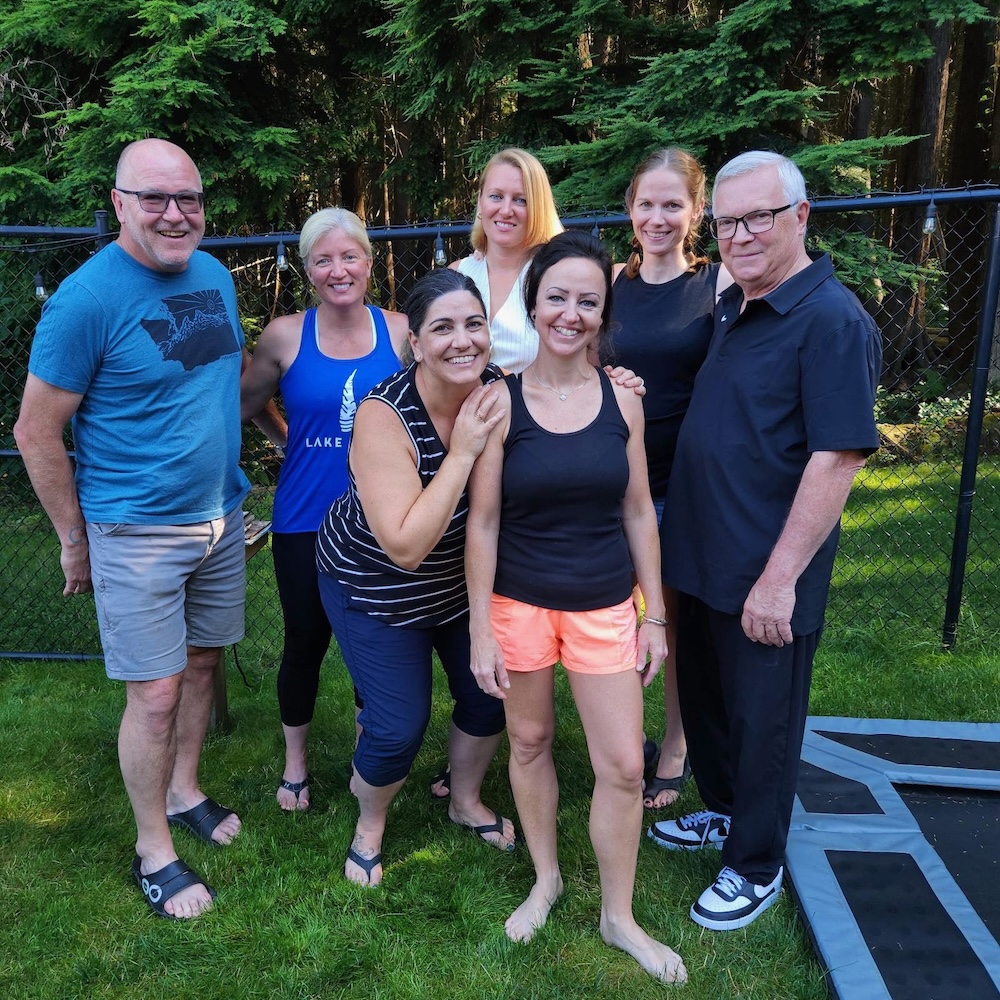
To this day, however, it’s every bit as much about the student-athletes he was able to reach on all of those high school teams he coached in both Langley and Mission, many of whom have remained in touch, and who through the passing of years appreciate more and more what their experience was actually all about.
“I was a horrible, horrible player, probably the worst player of them all and Langford and Miller gave me a chance,” says Christine Hutchins, who played four seasons at Hatzic before transferring to Heritage Park for her Grade 12 year in 1996-97. “(Langford) was my basketball and my social studies teacher so I knew him in different contexts and he wanted to see how much you could improve, not only in basketball, but in life.
“I was really shy and timid, like probably a lot of young girls in high school,” continued Hutchins, “but he encouraged growth in me. I remember a quote in his classroom, just above the door that said something like ‘If you do something for somebody else that they can do themselves, you’re retarding their growth’ and I think that’s what I’ve tried to do. In the end it wasn’t just about learning how to play basketball, it was all about the take-away skills.”
True to form, those bonds have just grown stronger for Hutchins who these days works at Simon Fraser as a program assistant in the Office of Francophone and Francophile Affairs.
Hutchins, 47, still sees both Langford and Miller on a regular basis, and this fall her eldest daughter Naomie will play senior varsity basketball at Port Coquitlam’s Riverside Secondary on a team coached by none other than Paul Langford, as much a dean in the high school ranks as his older brother Bruce has been as a university coach.
Respect has poured in from all corners following Langford’s retirement, including from several NCAA teams up and down the west coast who have reached out to pick his basketball mind.
And from within the GNAC, SFU’s own conference, came more of the same from its longest serving and most decorated coach.
“His players, they just get better every year,” said Western Washington head coach Carmen Dolfo, a B.C, native who helped lead Penticton to the B.C. top-tiered provincial high school crown back in 1982 and has been the Vikings head coach for 36 seasons and counting.
“And Bruce has really taken advantage of the three, he really develops three-point shooters and his players are always so fundamental and sound. He’s such a funny guy and he develops great people. He’s had an incredible career and he’ll be missed.”
A PROMISE TO NEVER PROMISE
As dogged and studious as Bruce Langford’s academic pursuit of the game’s X’s and O’s had been, the other half of his coaching brain arrived a lot more fully formed.
For this part, as he came to understand the nuances of dealing with student-athletes and their demands within an academic environment he was able to tailor that which came from the natural parts of his persona as a mentor and a motivator. And as the years went by he just became so much more comfortable being himself and speaking from the heart.
So much so that when it came to characterize the tone and timbre he brought to his recruiting visits, it doesn’t take long to track his traits.
Ask a trio of his ex-Simon Fraser players to tell their recruiting stories and its their independently shared themes of uncompromising honesty and an understanding that hard work and an open mind would go a long ways towards potential success that seem most prevalent.
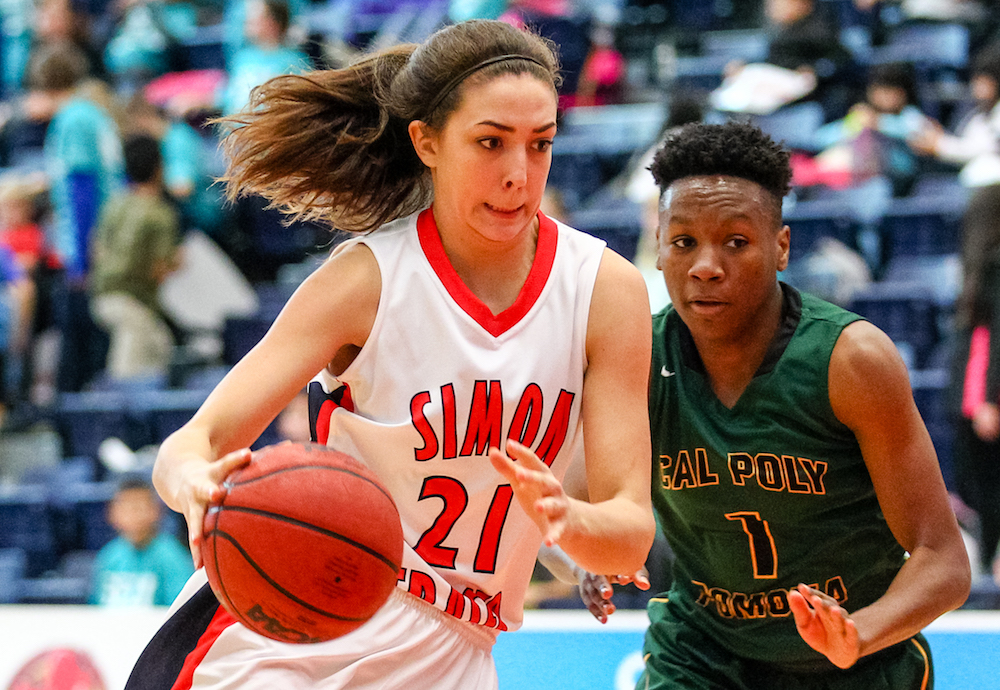
All of that was a starting point for hard-nosed Red Leafs’ forward Sophie Swant, the North Vancouver-Argyle product, who during her recruiting visit in 2015, was told by her coach-to-be that she “shot the basketball like she was in Grade 7.”
Years later, you can not only hear the laugh in Swant’s response, but the strains of wisdom which accompany it.
“He just delivered it with candour… it wasn’t up for debate,” says Swant, now 29 and an assistant coach with the men’s team at UBC-Okanagan. “I mean right then and there, your knee jerk reaction as a17-year-old was ‘OK, I’m sorry but who are you? And who’s your rival? I’m going to go play for them.’
“But after five minutes to digest it in his office during my recruitment visit, I’m like ‘Well, these are things I kind of do know about myself’ and the fact that I have someone willing to not be liked, so to speak, yet he’s willing to hold a mirror up to me so I can actually understand what I am trying to work on… I value that. And, I knew that from then on, I was never going to be told something that wasn’t true.
“It was the start of my recipe for success at SFU,” continued Swant, who these days lives in Kelowna and serves as the Manager of People and Culture for the Terry Fox Foundation. “The trust fostered between him and I started from a place of honesty which I really value”
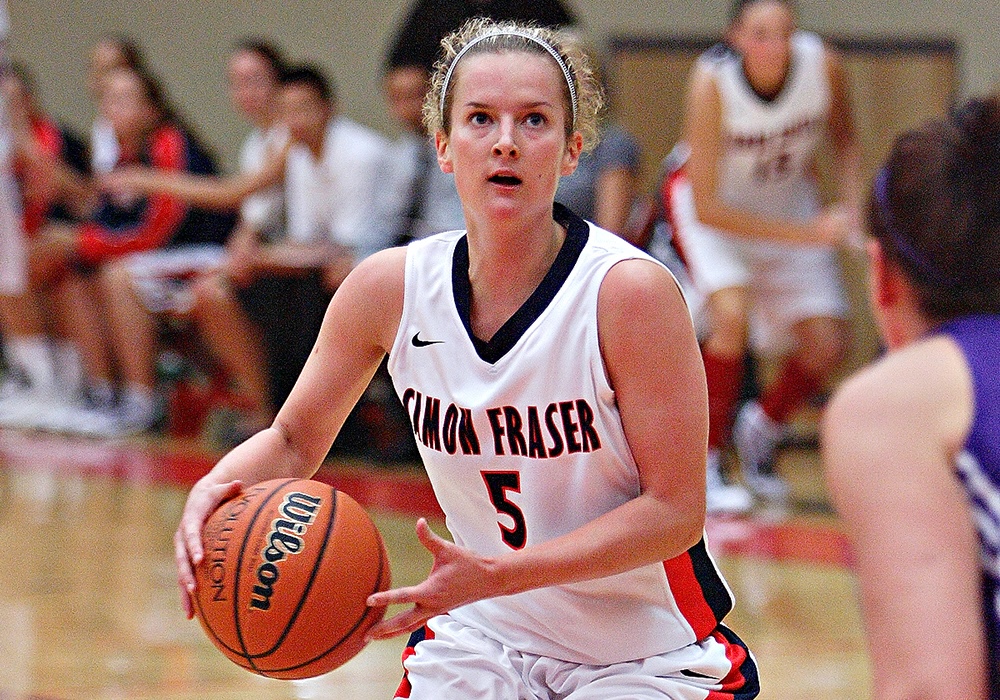
Lisa Tindle (Vancouver-York House) and Robyn Buna (Kelowna) arrived at SFU one season apart beginning with Tindle in 2005-06 and together the pair were a part of the most fertile chapter of Simon Fraser’s dynastic run through the first decade of the new century.
Interestingly enough both players admit that through the vast majority of their high school careers that Simon Fraser was their only serious recruiting suitor.
And of course with that came more stories of Bruce Langford’s unique recruiting style because the 5-foot-6 Tindle, not gifted with supreme athleticism, was as much a self-made player as Langford was a self-made coach.
In a story your author wrote for The Province newspaper just before the start of the 2010 nationals, SFU’s last in U SPORTS, Langford said: “Lisa Tindle is a self-produced basketball player. She has done it off of hard work. She has done it off of commitment. She wasn’t gifted with strength, she wasn’t gifted with speed and she wasn’t gifted with size. In fact I’d say that she fell in love with a sport that she wasn’t ideally suited to athletically. But she made herself what she is which is a cerebral, skilled, good-shooting point guard. And she’s battled a lot of adversity along the way.”
Of course all Tindle did over the course of her career was win four straight B.C. Double-A high school titles at York House, then come to SFU and win three national titles for a total of seven championships in nine seasons.
“Langford started recruiting me when I was in Grade 8,” said Tindle.
“He’d write these notes for me and he’d have them put in the mailbox for me at York House,” continues Tindle, 39, now married with three kids, including two daughters who will both be enrolled at their mom’s alma high school mater this coming week. “He’d comment on something he thought I did well that had nothing to do with me scoring 30 points in a game, but maybe something about being a good teammate.”
And asking Tindle about how Langford assessed her game during her recruiting visit is consistent with the scouting report he provided to your author in the aforementioned 2010 newspaper story.
“One of my favourite parts of playing for Langford was not just his ability to critique me, but to then support me in reaching towards a goal,” said Tindle, these days a portfolio manager at Connor, Clark and Lunn, a Canadian investment management company.
“He was clearly able to highlight where you were lacking,” she continues with a laugh, “but then say it in a way that made you believe you could achieve more. Like in my second year at SFU I had some great shooting games and then I would disappear for a couple of games. He’d harp on me for consistency, but he’d say ‘You’re too good to disappear like that.
“Clearly he was telling me that I’d disappeared,” Tindle says with comic incredulity, “but he’d say it in a way where it was ridiculous and that I was capable of so much more. I loved that he was a direct communicator.”
That season, Tindle wound up finishing fourth in the country in made triples in what may have been the tightest U SPORTS women’s race ever contested for most made three-point goals in a season. Thompson Rivers’ Kelley O’Grady, a Nanaimo District grad, led the way with 56 triples, while second and third finished with 55 and 54 threes respectively. Tindle was just three off the lead with 53 triples.
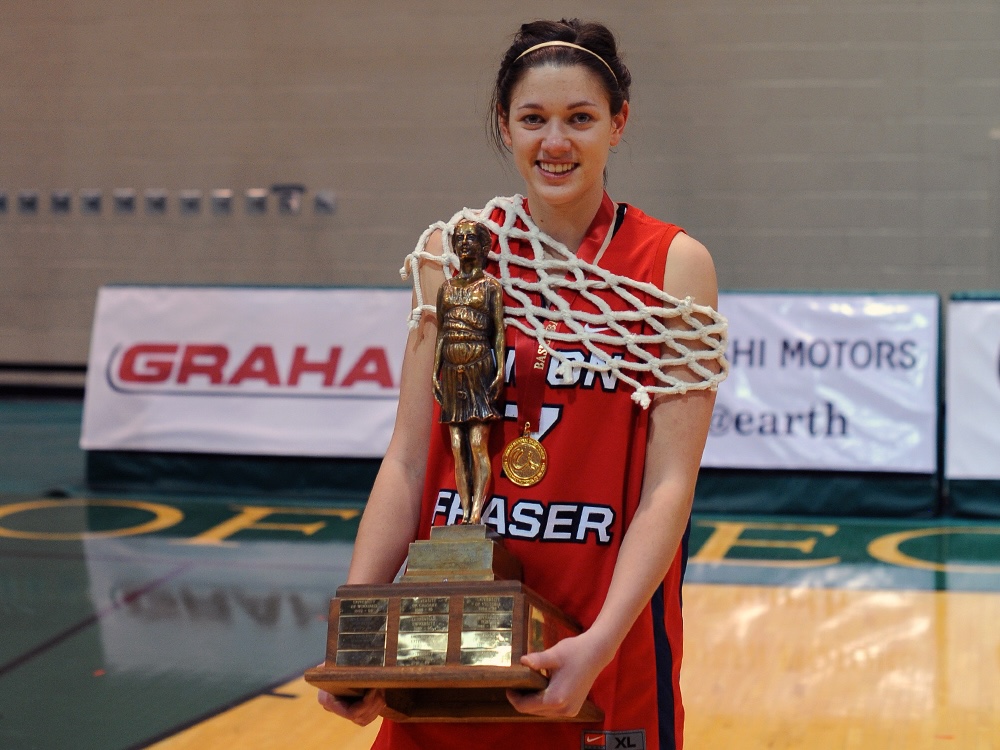
Then, of course, there’s Buna, one of the most decorated Simon Fraser players ever.
In her swan song 2009-10 campaign she crafted the fairytale ending in what has stood as SFU’s last U SPORTS women’s basketball game by not only winning the Nan Copp award as the nation’s top player, but earning the MVP award in SFU’s 71-56 title-game win over Windsor.
A 5-foot-11 big guard/wing with a great shooting touch, Buna may have been the biggest recruiting coup of Langford’s SFU career.
Yet again, despite all of the promise he might have seen in the Kelowna Owls product, he still promised her nothing.
“As I was being recruited, it was very much like ‘You’re going to come, but you might not ever play, you may be a redshirt, you may be dressing but not getting a lot of minutes, so my expectation was that I was really going to have to work for it because growing up in Kelowna you’re used to being the big fish in the little pond… so that was my initial knowledge of what I was going to be on the team,” said Buna who admits that her skills were still unrefined as a high school senior and that Langford, while welcoming her height and her shooting potential, mentioned what he saw as deficiencies with her defence and lateral quickness.
Interestingly enough, a Simon Fraser team which would finish 32-1 en route to its fifth Bronze Baby, had run into some early injury woes in the stretch drive to its season opener.
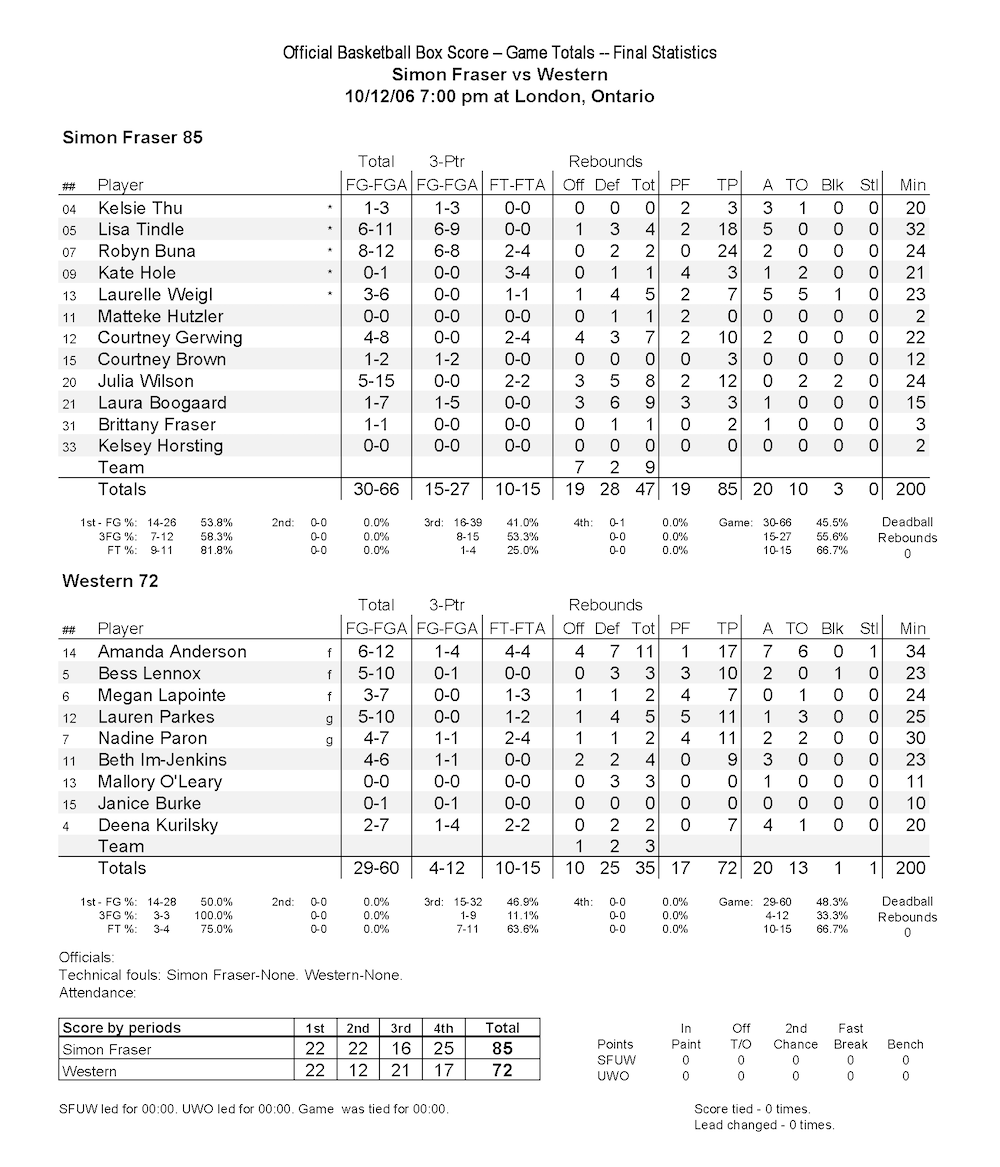
“I was thinking at the time that maybe I might get to play a bit, and for reasons I am still not totally sure about, Langford started me,” Buna said in remembrance of the team’s first preseason road trip, the first of a two-game weekend series at Western Ontario, in Langford’s hometown of London, Ont.
What happened was a harbinger of things to come.
Buna, the raw rookie, shot out the lights, knocking down five first-half threes, and finishing 6-of-8 from distance for 24 points, while in the same game Tindle went 6-of-9 from downtown and finished with 18 points. SFU won 85-72.
All these years later, all three of the aforementioned players say they wouldn’t have changed a thing about their Simon Fraser experiences under Langford.
Said Buna, these days a pediatric emergency physician and an assistant program director at Alberta Children’s Hospital in Calgary: “(Langford) was so good at finding something for each person. He was so good at pushing you just outside your comfort zone so you’re getting stretched and having new experiences. And he was always willing to learn and to try new things in practice or on the basketball court. It was appreciated how he made adjustments to make things work for the people around him.”
Tindle, who now balances career and family in her post-SFU playing days, has never forgotten the presence Langford brought on a daily basis simply through his love for the game and the ways it so reliably brought multiple levels of connection to a group of engaged people.
“When I left SFU I wrote him a card to say that it was so cool to see how much he loved what he did, and I think it killed him when they went to the NCAA and he couldn’t work out the players anymore,” said Tindle of the fact that in the U.S.-based association — of which SFU belongs for one more season under its new head coach Shalie Dheensaw before the Victoria native takes them into U SPORTS — coaches are restricted to eight hours per week of off-season instruction, only four of which can be dedicated to basketball-specific skill development. “The hours I spent with him in the summer (during the U SPORTS years), he loved being in the gym and I loved it, too.”
So, too did Swant, who now makes the time to make a difference in much the same way her mentor did.
“I mean, it’s been amazing,” Swant begins. “Short of, you know, a parent, he’s right up there. So for me to stay in a coaching role and kind of steward those values like human development and people development through coaching and impacting young people… it’s why I think I had such a fire to coach, to essentially pay it forward to future generations. And that all starts with him.”
THIS BRUCE IS HIS OWN BOSS
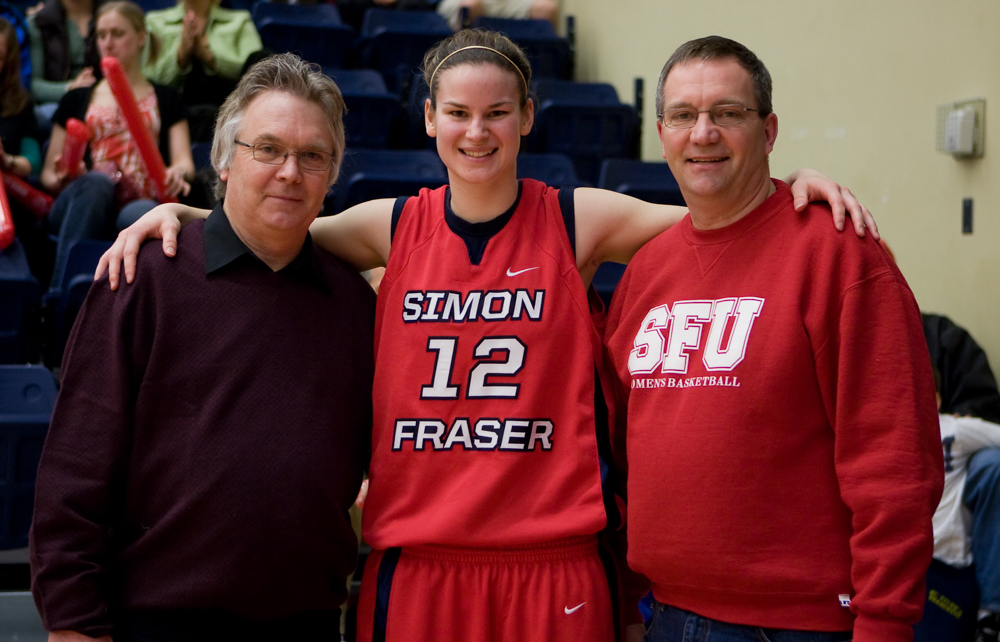
Paul Langford raises a pretty interesting question when he’s asked to comment on his older brother’s first September without a basketball team to coach since 1978.
“I am not sure he’s retired,” says Paul, 69, who will himself be entering his 29th season this fall as the Riverside girls head coach and 45th season overall if you include Gladstone, and Mary Hill and Pitt River junior secondaries.
“If they hadn’t gone to the NCAA,” continues Paul of an SFU women’s team which made nationals all nine years under his brother and were showing no signs of slowing down when they switched to NCAA competition in 2010-11, “I don’t know who would have stopped them.”
Both Bruce and Paul Langford are enshrined as coaches in the Basketball B.C. Hall of Fame, yet Paul points out that the multiple successes of his older brother make him a true outlier.
“Bruce could be in just for his university coaching, but he could also be in for his high school coaching and he could also be in just for his provincial team coaching.”
Bruce Langford enjoyed great success leading regional and provincial team programs, highlighted by leading B.C. to back-to-back Canada Summer Games gold-medal championship wins over powerhouse Ontario. In 1997, led by Teresa Gabriele (née Kleindienst) and Co., B.C. topped an Ontario team led by the NFL Network’s Stacey Dales, and then again in 2001 when the B.C. lineup was littered with SFU players including Dani Langford, Julia Wilson, Devon Campbell and Maren Corrigal, as well as Kim Smith Gaucher, who Langford coached in high school and who eventually went on to play NCAA Div. 1 for the Utah Utes.
Ask him if he had been planning his retirement and Langford doesn’t provide a definitive answer except to say that the bond he had with his players was going to make it excruciating regardless of when he decided to walk away.
“When I was coaching in high school, I said that I was going to get a master’s degree as soon as I had a team that didn’t need all my attention… and maybe all my love, and I never had one,” began Langford, who over the course of his career coached a future WNBA player in high school in Smith Gaucher, and at a future one at SFU in Nayo Raincock-Ekunwe.
“Every year I loved every team, and I joke that my wife got her master’s and my daughter got her master’s, and I never got mine.”
But?
“I did more than a Master’s in learning because I didn’t start teaching as a basketball coach,” he explains of a 1978-79 school year he spent as a substitute teacher in the Langley School District.“I wasn’t a basketball coach. I knew very little about basketball.”
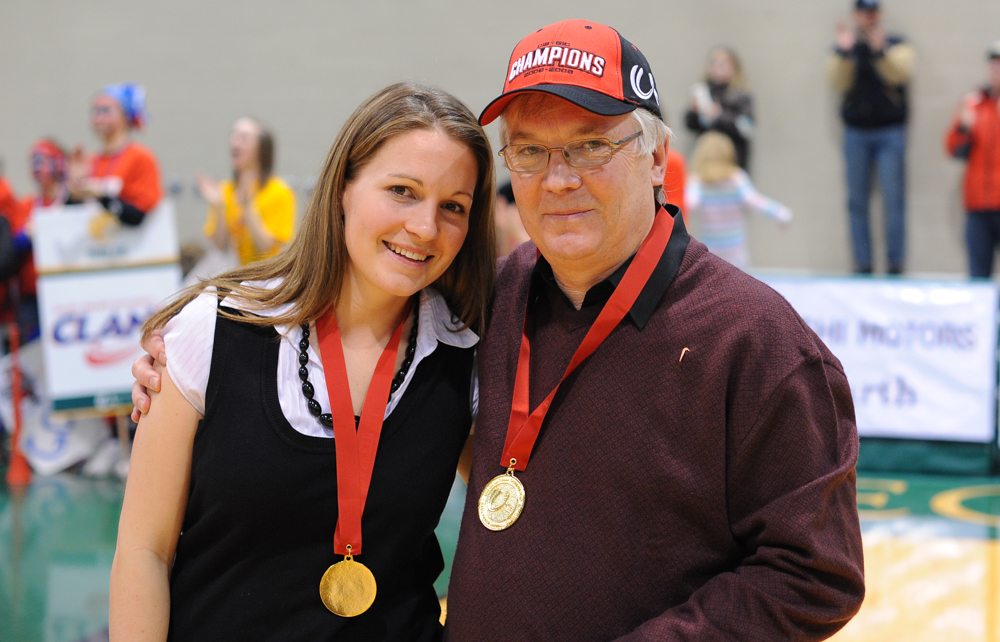
While his players may not have known it, Langford figures he knew just enough to keep a step ahead of his players during those early high school days in the Mission School District.
“I don’t think you really understood that until you’ve gotten a bit older and you can look back on it,” explains Gabriele who over the summer was officially enshrined in the Canadian Basketball Hall of Fame where she joins Allison McNeill. “As you’re going through it, you’re like ‘He’s my coach. He’s my mentor,’ but when I look back on it now, Bruce took Hatzic and brought them to the highest level possible, then he took Heritage Park to the highest level possible, and then he came to SFU and he took them to the highest level they could go. So I think it really says something about the person and the coach that he is able to do that consistently at every level that he’s coached.”
And then there’s the matter of something that is rarely, if ever, discussed about his coaching style.
“One thing I really valued as a player,” adds Swant, “is that he never tried to put you in a box. So as an athlete, I never felt limited to try something new. He’d always vet what you were trying to do, but he appreciated the willingness to try. He appreciated taking risks, you know… failing towards success and not worrying about what that meant about him, his program or his legacy. He never entered himself in the narrative.”
Langford admits that he was not liked by every player he coached.
Yet he loved his teams, and as the 2025-26 season came to an end he delivered the news that he was sure of his decision to step away.
“The hardest thing wasn’t quitting, but telling my team that I’m gone was. The hardest thing was saying good-bye to a group of players that I cared immensely for.
“It was my dream come true,” he said of his career. “I mean, who would have thought?”

And yet the inner drive that proved to be his salvation from a hard-scrabble childhood did not come at the simple push of a button. Bruce Langford wore it on his sleeve for almost a half-century, through the good times and the bad, and that’s why he brought his team onto the floor for so many opening tips atop Burnaby Mountain to the strains of Bruce Springsteen’s anthemic ‘Badlands’.
“Everyone jokes and laughs at my Springsteen love, but Badlands is all about hardship and ordeal in the world and how we’re going to face it,” he says.
In the end, that’s just what he did when he delivered the news of his departure to his team.
“I thought the easiest way would be to just die on the court and I wouldn’t have to worry about leaving a group of kids that I had recruited,” he said. “It would have been the easiest way.”
Thankfully, he got to take the hard way instead.
There’s a line in ‘Badlands’ that begins the song’s first bridge to its chorus, and it’s so universal for not only a team looking to reaffirm its purpose, but also for a grey-haired, battle-scarred coach who has never forgotten how important it was to dream big, and that’s why Langford had those words printed on t-shirts and on handouts for his SFU teams.
‘Talk about a dream… Try to make it real’ mimicked the t-shirts of Badlands’ lyrics which continue ‘You wake up in the night With a fear so real You spend your life waiting For a moment that just don’t come Well don’t waste your time waiting.’
Bruce Langford stopped wasting his time long ago.
Instead, he’s walked that song’s walk for the last 46 years. Broken compasses be damned, his badlands are treating him good.
If you’re reading this story or viewing these photos on any website other than one belonging to a university athletic department, it has been taken without appropriate permission. In these challenging times, true journalism will survive only through your dedicated support and loyalty. VarsityLetters.ca and all of its exclusive content has been created to serve B.C.’s high school and university sports community with hard work, integrity and respect. Feel free to drop us a line any time at howardtsumura@gmail.com.

Incredible profile of an incredible human being. Miss you Langford! Guess I have to go listen to Badlands now…